
Chapter 7 · Accepted product rules (0.2.x)
Battery Assurance
Separate current power telemetry from evidence that backup actually worked — and keep protection findings open until they are documented closed.
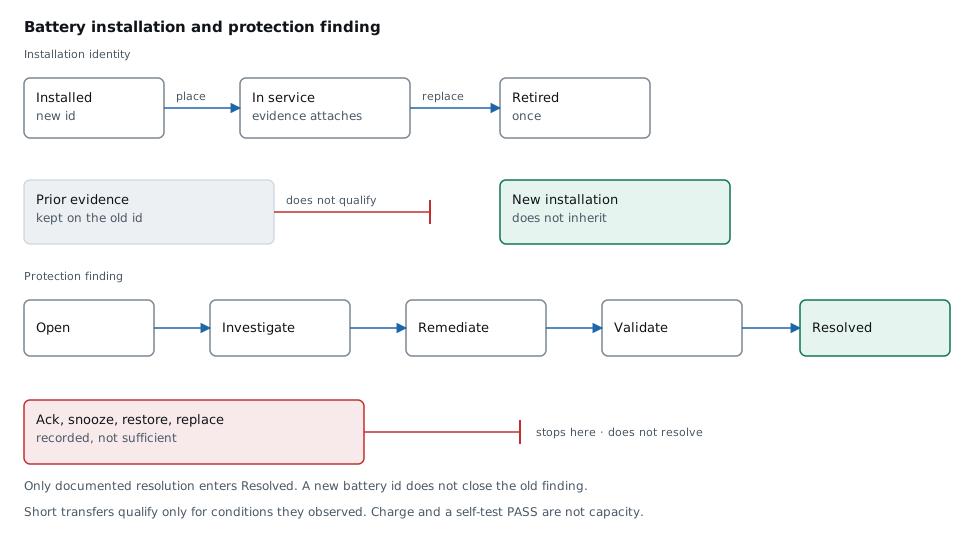
Figure 12. Battery installation / evidence / protection-finding lifecycles
Takeaway: Prior evidence stays on the retired installation and does not qualify the new id. Ack, snooze, restore, and replacement do not resolve a finding.
Related: Glossary · mockup product/app/ups.html
Four facts (never one badge)
- Current power, charge, load, runtime estimate, freshness
- Evidence of battery-backed operation and reported self-test results
- Evidence age versus assurance policy
- Unresolved protection failures and follow-up
Evidence rules
- Sources:
ups-reported·collector-observed·operator-reported - Occurrence time ≠ receipt/recording time; date-only precision shows a date without inventing a clock time
- Eligibility first, then age; overdue ≠ none
- Evidence before
installedOnnever qualifies that installation - Old-battery successes do not qualify a replacement
Finding lifecycle
Failure recorded → investigating / remediation → validation pending → resolved with linked evidence and/or authored observation.
Must not auto-resolve: utility restoration, acknowledgement, notification snoozing, or recording a replacement alone.
Monitoring-only. MainsKeeper may read UPS-reported self-test results and record externally performed tests. It never schedules or initiates hardware tests.
Preferred operator-facing statements
- “Battery operation observed: 8m 34s at approximately 24% load.”
- “UPS-reported self-test passed; test date unknown.”
- “No battery-operation evidence recorded.”
- “Evidence overdue under this UPS’s policy.”
- “Transfer failure reported by operator — unresolved.”