
Reference
Diagram gallery
Fourteen figures. Chapters embed the same SVG files. fig-enroll-sequence.svg matches Figure 6, and fig-replay-sequence.svg matches Figure 8. Enrollment sequence · Replay sequence.
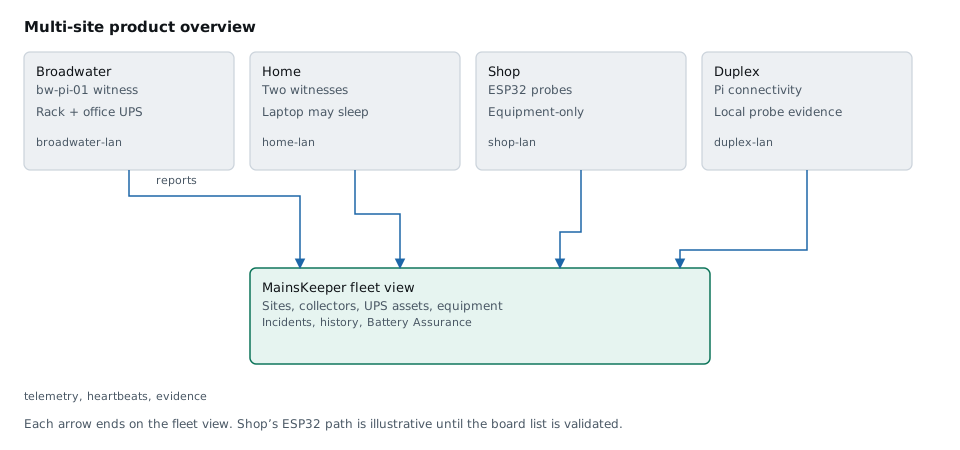
Figure 1. Multi-site product overview
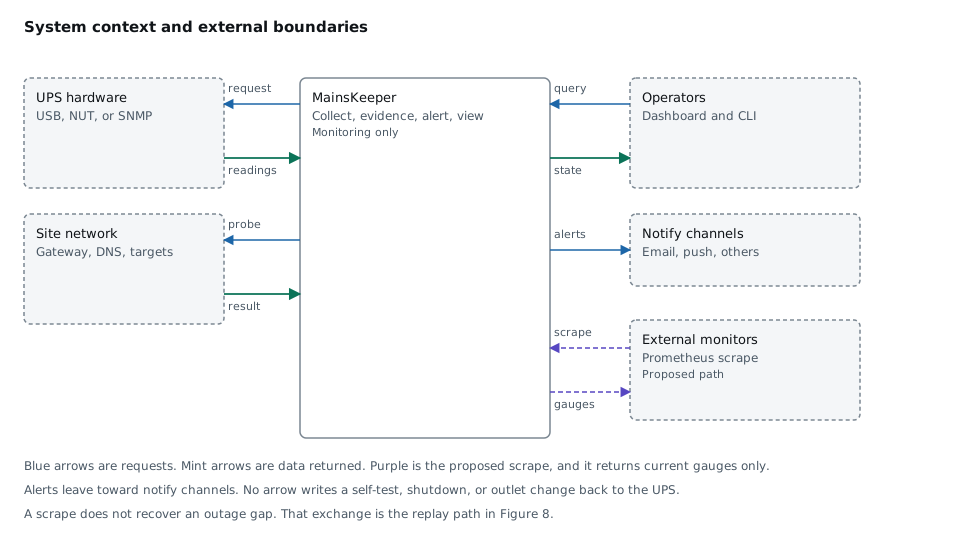
Figure 2. System context and external boundaries
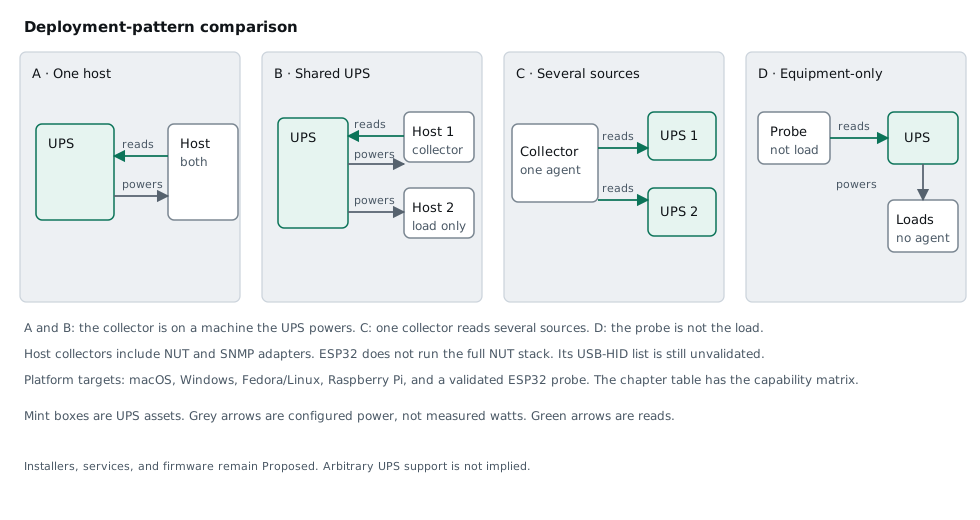
Figure 3. Deployment-pattern comparison
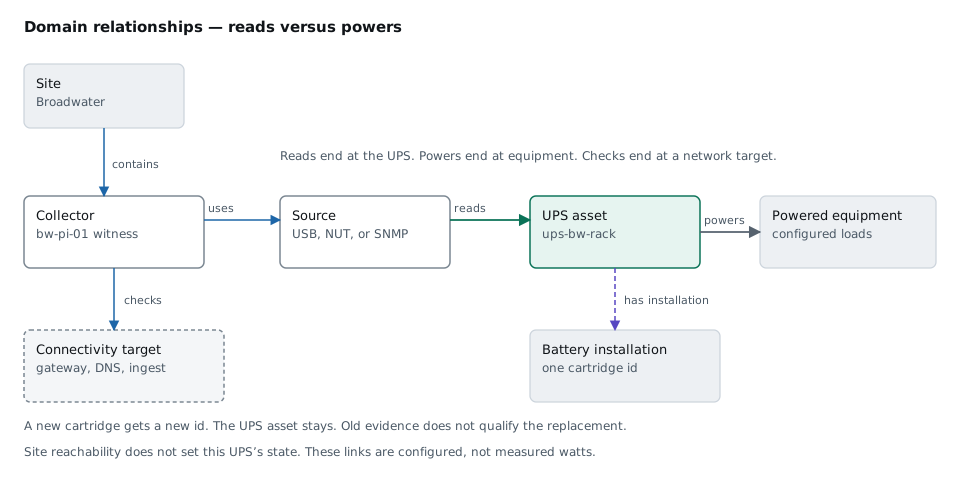
Figure 4. Domain relationships — reads vs powers
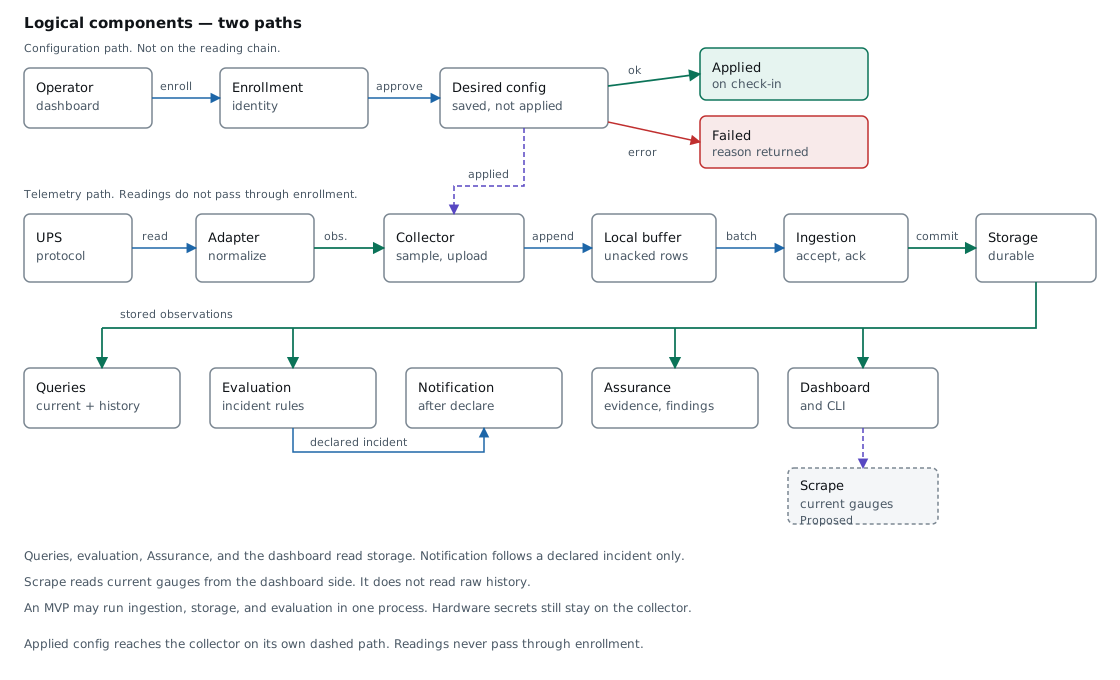
Figure 5. Logical components and responsibility boundaries
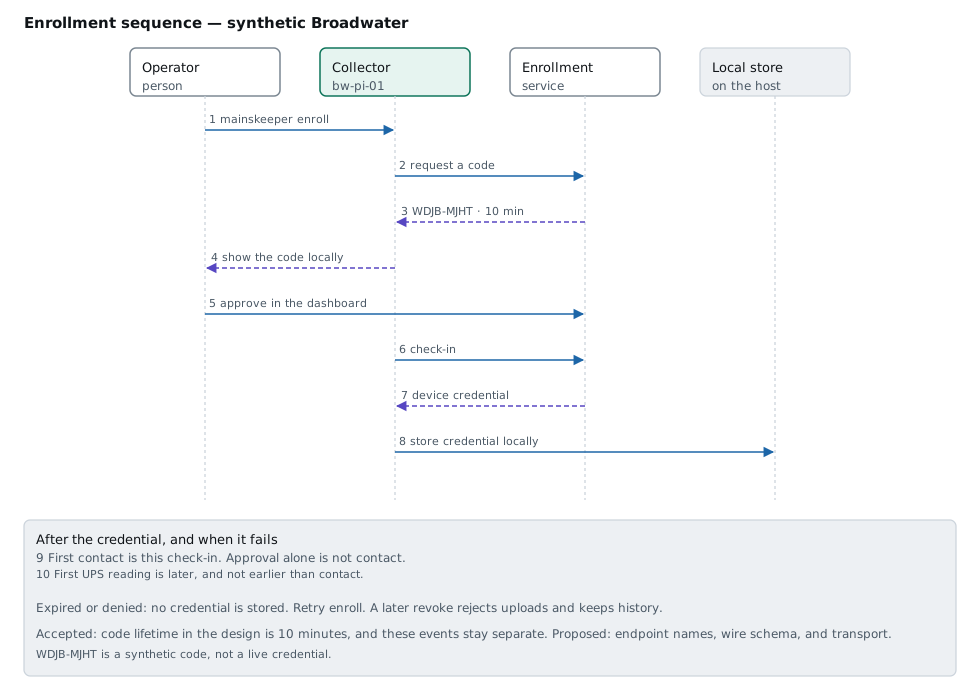
Figure 6. Enrollment sequence
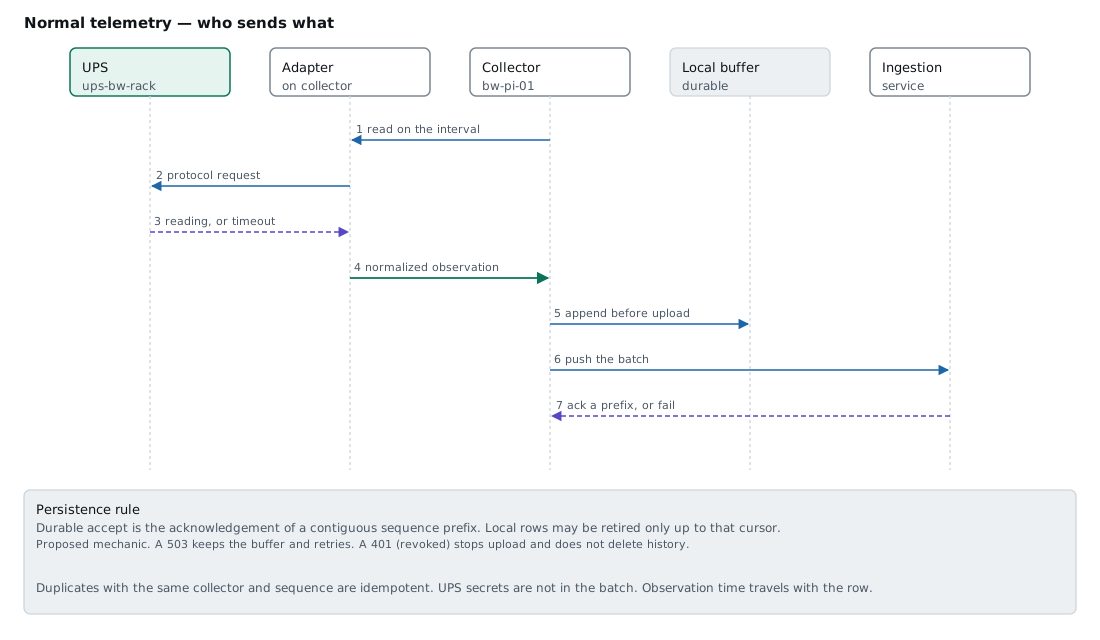
Figure 7. Normal telemetry flow
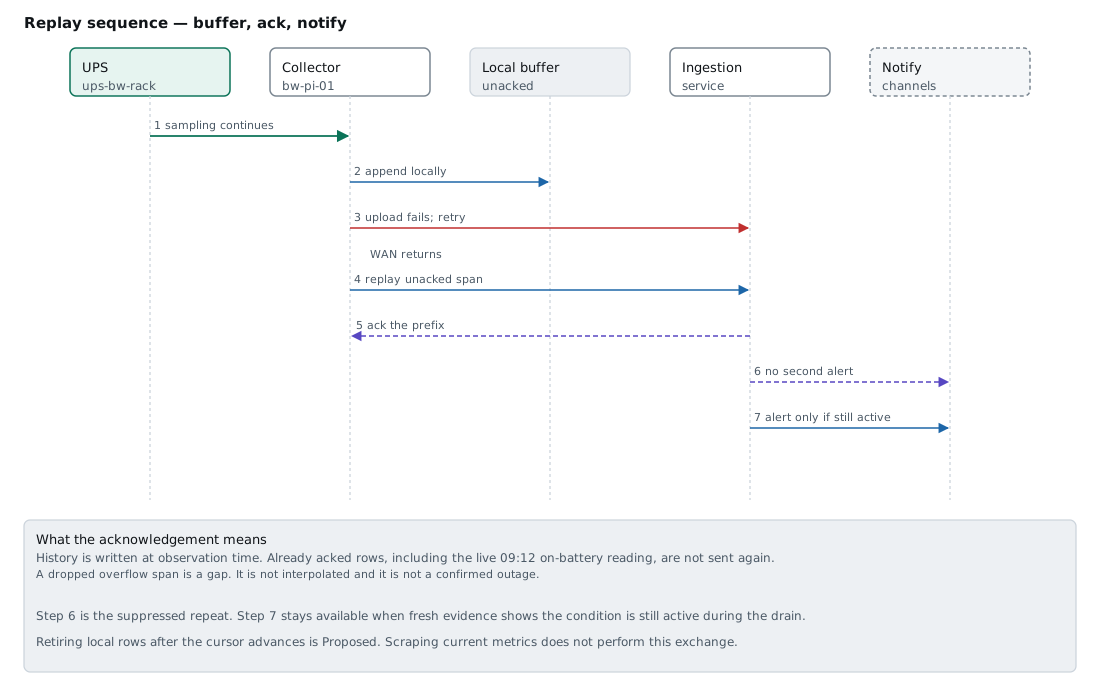
Figure 8. Offline buffering and replay
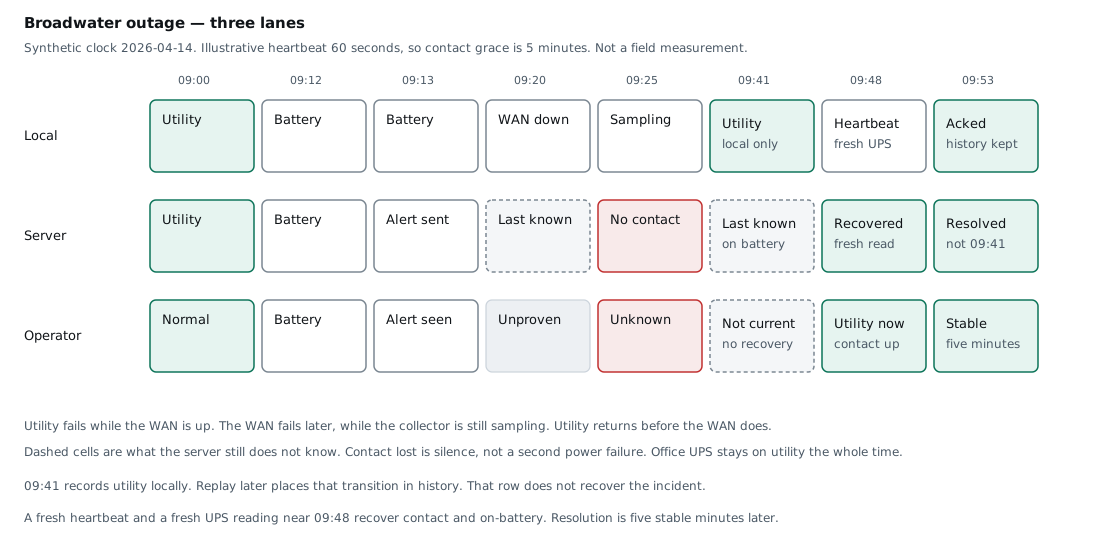
Figure 9. Outage timeline — known vs unknown
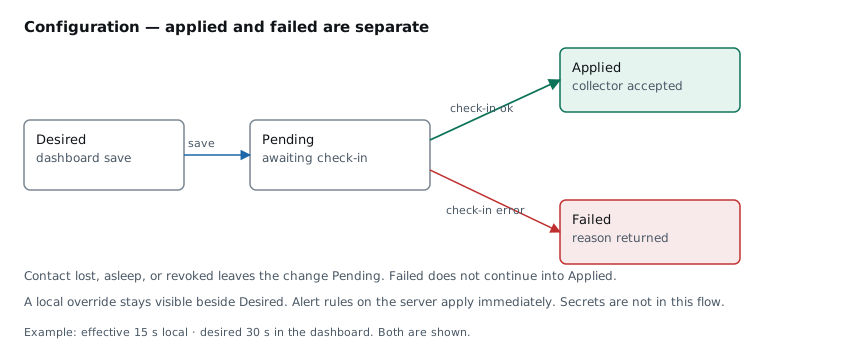
Figure 10. Configuration states
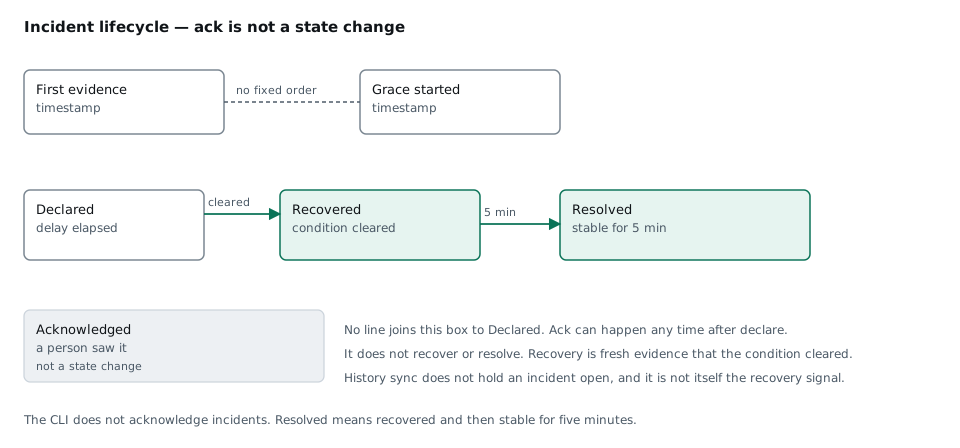
Figure 11. Operational incident lifecycle
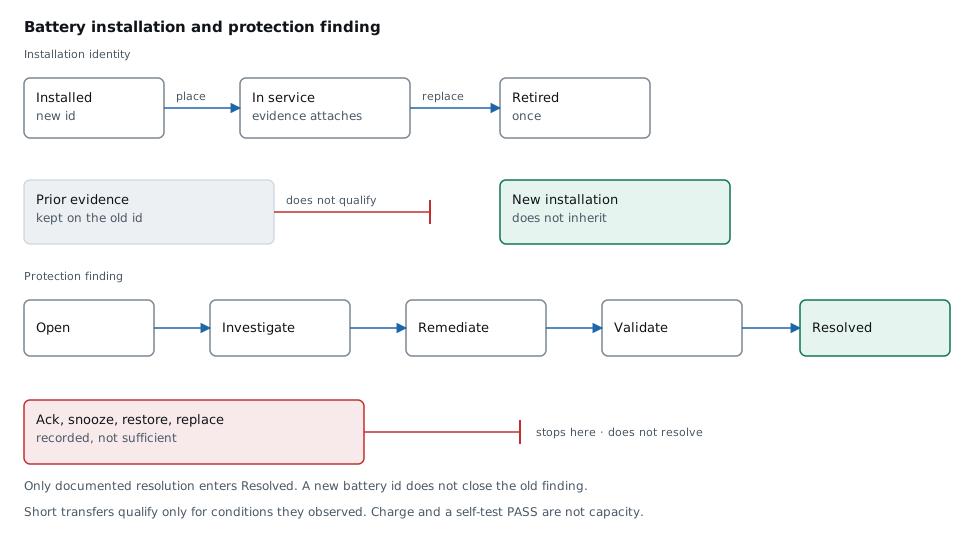
Figure 12. Battery Assurance lifecycles
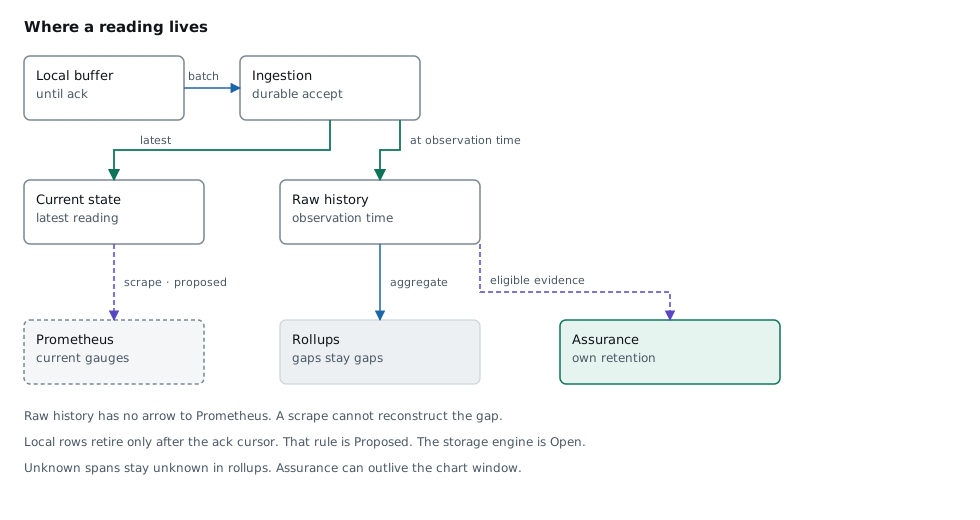
Figure 13. Storage layers
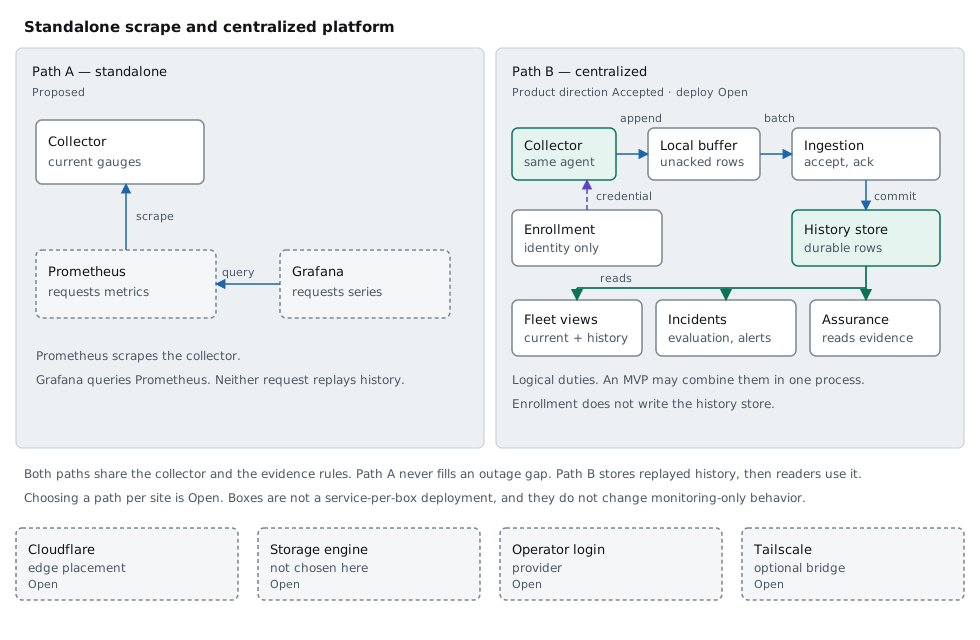
Figure 14. Standalone vs centralized platform
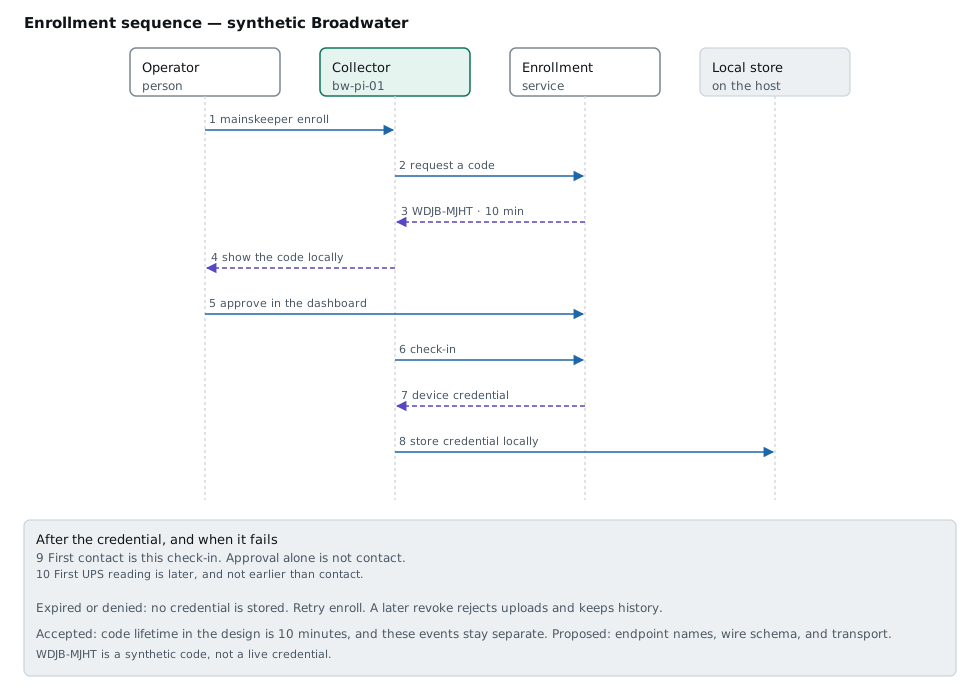
Enrollment sequence
Takeaway: Approval, first contact, and the first UPS reading stay separate.
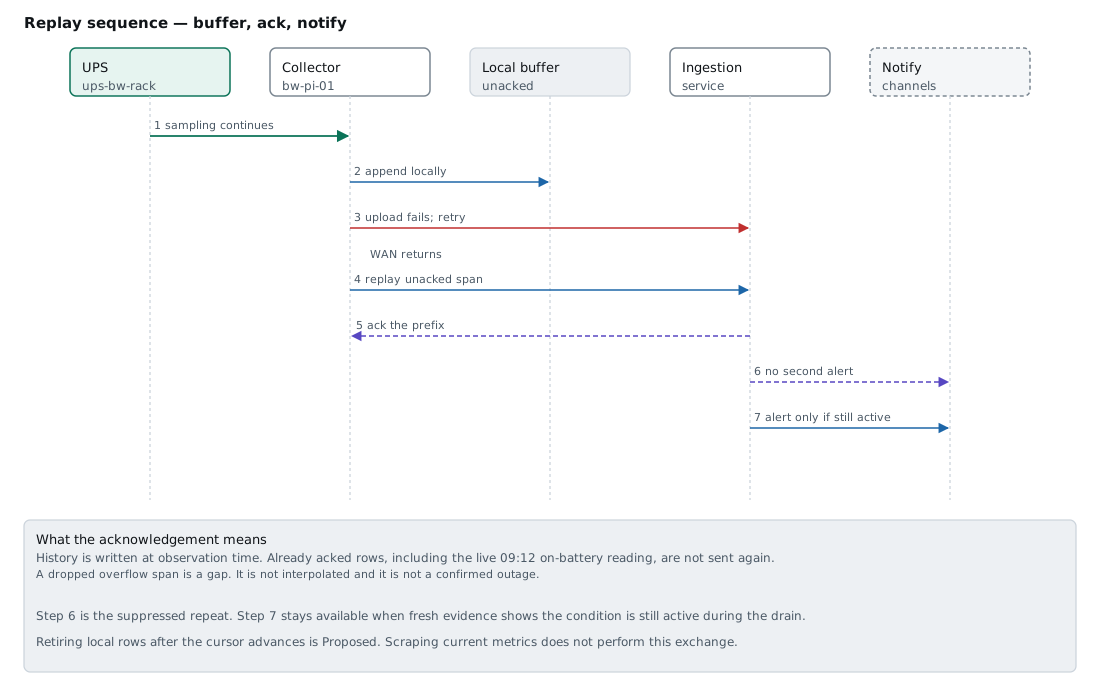
Replay and acknowledgement sequence
Takeaway: Replay writes history at observation time and does not invent the span a full buffer dropped.